
Whatever your opinions as to the ‘how’, there’s no denying the indomitable rise of SHEIN, as its ultra-fast production, trend-led and low-cost fashion offer continues to win favour with countless Gen Z consumers. In 2023, the Chinese-founded firm doubled its profits to more than $2billion, and it now ships to 150 countries globally while reportedly eying a London listing this year.
But SHEIN’s rise as a fashion ecommerce power-house hasn’t come without controversy, and it has faced questions about ethical working practices and workers’ rights within the media and by Swiss advocacy group, Public Eye. It has also been challenged about the environmental impact of its business model, with Time magazine suggesting it contributes 6.3million tonnes of carbon dioxide a year.
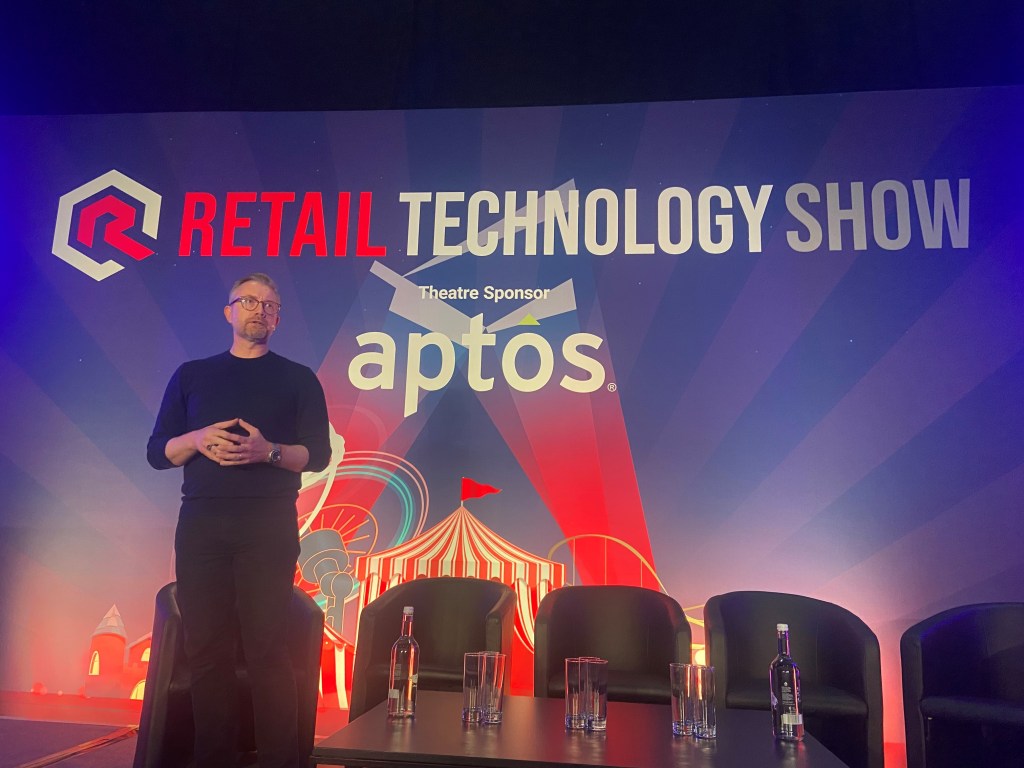
Speaking at Retail Technology Show, SHEIN’s Head of Strategic & Commercial Affairs for North America and Europe, Peter Pernot-Day, offered to lift the lid on how the online apparel giant was able to sustain its competitive pricing model through technology, and how it is looking to amplify its sustainability efforts.
Fashion – but make it accessible
Launched in 2012, Pernot-Day outlined how SHEIN’s founders wanted to understand how the customer could be put at the centre of the fashion industry and developed the firm’s founding mission; to develop new ways of making clothing so fashion is accessible to everyone. This vision statement to solve fashion’s “accessibility crisis” has been the obsession of the retailer since then. This is why it continues to drive forwards with its unique approach to making clothes, its progressive application of retail technology and its commitment to putting shoppers front and centre of fashion.
As well as selling direct, SHEIN also offers an integrated marketplace, which allows brands to come alongside its core of fashion, beauty and lifestyle products and to tap into SHEIN’s sizable – and growing – Gen Z customer base. But while, the marketplace offer has accelerated growth – last year SHEIN was the UK’s most downloaded fashion and beauty app on mobile devices, with around eight million downloads – Pernot-Day was quick to deny that its marketplace is an ‘everything store’.
“The marketplace at SHEIN is not an everything store. The idea is to create a curated collection of categories that match our core beauty and lifestyle products. It reflects our desire to bring others alongside, to experience our growth and see the power that making fashion accessible to everyone has, both from an economic perspective but also from a customer-centric perspective.”
Peter Pernot-Day, SHEIN
Demand-led, customer-centric fashion
SHEIN credits its on-demand supply chain, which focuses on micro- and demand-led production, for driving its competitive advantage and low pricing, as well as setting it apart from other traditional retailers. “Instead of having to produce in large scale batches, we focused instead on a highly responsive, highly efficient demand-led process we call the on-demand business model,” Pernot-Day explained.
This on-demand business model means SHEIN isn’t placing large scale orders, based on predicted trends, for apparel months or even seasons ahead. Rather, it relies on a highly responsive and agile network of supplier partners, which can respond in near real-time to changing demand trends. This micro-production strategy means that, “instead of placing large quarter-forward bets and placing orders in the hundreds or tens of thousands of units, [SHEIN] orders 100 – 200 units per line.” This gives its designers the freedom to test a wide array of designs, while catering to microtrends and niche interests, bringing the designer and the customer into closer conversation.
A feedback loop to bring designers and consumers closer
These small run designs are able to be produced quickly using SHEIN’s production network – and, once launched on the online storefront or app, the feedback loop begins.
Across its channels, SHEIN reviews the engagement with a product to assess demand – whether its frequency of an item being added to a cart, views or sharing on social – as well as the speed of engagement on new designs. It then uses these demand signals to understand whether a garment is resonating with its audiences, which automatically triggers reorders and orchestrates additional runs, based on real-time demand.
“The aggregation of engagement data [creates] a demand signal. Once that is detected, we know a product is resonating with our customers, and that we’ve captured something which reflects [their] interests… Bringing designers, customers and producers into close conversation through the application of technology has allowed us to do this at scale.”
This approach means SHEIN aligns supply to demand, minimising the risk of stock outs whilst also ensuring it’s not burdened by excess inventory. It also credits this on-demand model for generating the efficiencies that allows it to offer lower prices, typically 20-40% cheaper than the competition, to shoppers. It also claims this enables it to offer low prices without cutting corners on product quality, safety standards or labour practices.
Radically customer-centric models that respond to demand
Additionally, this approach means the retailer can be “radically customer-centric” and extremely responsive to emerging trends – a key benefit when serving Gen Z customers, who have very fluid and changing tastes.
“Gen Z as a cohort has very changing tastes. It has a desire for self-expression that’s much more atomised and unique than previous generations. And it does not like to be pigeon-holed or defined. So, a platform that focuses on be reflective and responsive resonates with those Gen Z customers.”
Smart fashion, not fast fashion
Because SHEIN is micro-producing its collections and not carrying excess stock, it’s able to operate a low waste model; by producing in response to demand, it minimises waste and essentially operates as a sell-through business. This was why Pernot-Day was at pains to say that, despite its reputation for speed, SHEIN is not a fast fashion retailer, but a smart fashion retailer.
“When people conceive of our business, they often conceive of us as a ‘fast fashion’ business. Really, we’re something different. We’re much more of a responsive business. If you want to use a term, we’re smart fashion – not fast fashion.”
Pernot-Day continued: “our ability to produce virtually in response to demand has dramatically lowered our waste. By readjusting the way we produce clothes, we can lower the overall impact of garment production globally by lowering production waste.”
SHEIN goes green?
Circularity is an increasing focus for SHEIN, as it looks to reduce its impact on the environment and develop solutions that will benefit the wider fashion industry.
“Our objective is to be circular. We think customers will continue to want to self-express through their clothing. And if we’re going to drive changes in customer behaviour, and if we’re going to have meaningful impact on the carbon footprint of the fashion industry, we’re going to need to look at solutions that align with customer behaviour and economic incentives.”
For SHEIN some of the answer lies in looking at the total materials mix. It plans to invest in creating next generation materials that can be produced at scale, and can be used within ready-to-wear fashion accessibly, greening fashion whilst keeping pricing low. Pernot-Day explained how the retailer had partnered with a leading university to create a textile-to-textile recycling programme.
Dead stock is also another green retailing focus, and SHEIN already works Aloqia (formerly Queen of Raw), integrating its SaaS solution into its purchasing platform. The software goes round the world searching for dead stock, and when it finds it, it automates the purchasing and repurposing of it ready for reproduction, reusing materials and giving them a second life to reduce environmental impact.


 Retail Rewired
Leave a comment