
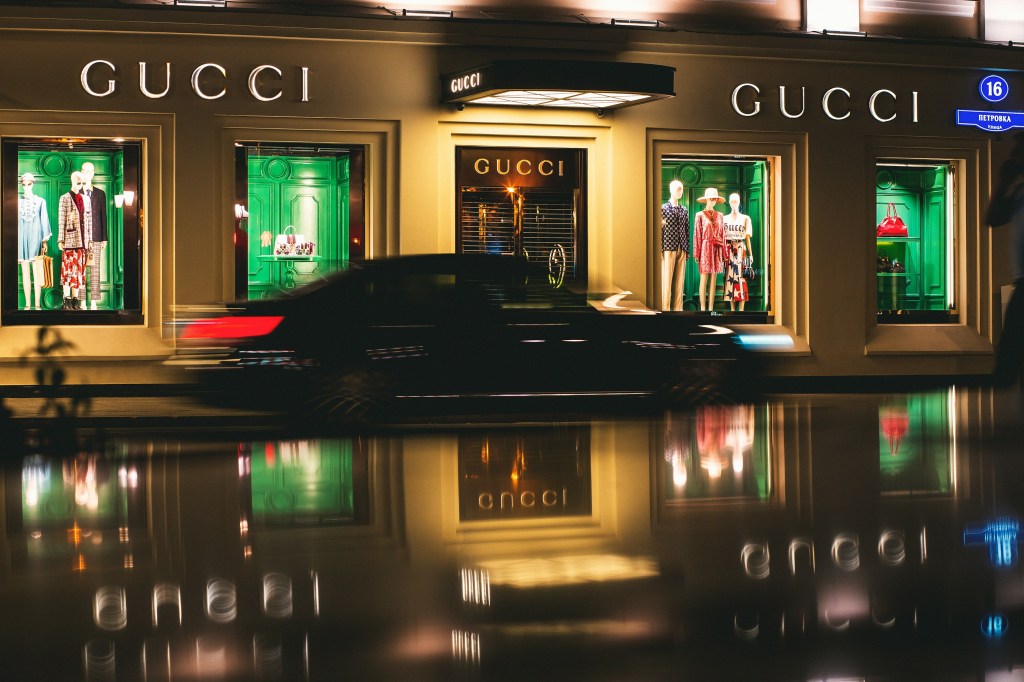
For years, luxury brands relied on a familiar formula: scarcity, storytelling and tightly controlled distribution. Growth was fuelled by aspiration and reinforced through brand-owned ecosystems, where pricing, positioning and perception could be carefully managed.
But now that model is under pressure, says Alexander Otto, Head of Corporate Relations at Tradebyte.
A paradigm shift for luxury purchasing
As its recent 2026 Luxury Report highlights, luxury ecommerce hasn’t stopped growing, but it has changed shape as the sector enters a new phase of AI-driven commerce.
Discovery, comparison and decision-making are increasingly determined by algorithms rather than brands. As a result, visibility is moving toward platform environments, such as marketplaces, often before a consumer reaches a brand’s own channels. At the same time, demand is fragmenting across regions, and price sensitivity is increasing across tiers.
This isn’t a downturn, but a normalisation phase.
Luxury’s challenge is no longer creating demand, but maintaining value, relevance and control in an AI-driven world shaped by algorithmic discovery, price transparency and platform logic.
New channels for discovery
The most significant shift is happening before brand interaction even begins. AI systems are increasingly acting as the first point of contact in the customer journey, filtering and shortlisting products in advance. Instead of engaging with a brand directly, shoppers are now being presented with curated selections shaped by relevance, context and consistency.
At the same time, consumer behaviour is evolving. The rise of the agentic consumer marks a departure from inspiration-led browsing to delegated decision-making. Consumers are turning to AI-assisted tools to research, evaluate and validate purchases rather than relying on brand storytelling; 33% of Gen Z already use AI as their primary research method for luxury shopping.
Decision cycles are compressed, with fewer touchpoints required to convert a sale. This has direct commercial implications. Friction, whether in the form of unclear product data, poor fit or unreliable fulfilment, is penalised, while pricing inconsistencies are surfaced immediately.
In environments that prioritise clarity, efficiency and consistency, brand strength alone is no longer enough to guarantee visibility or influence purchase decisions. Performance within these systems determines outcomes.
When value becomes measurable
As discovery becomes increasingly informed by AI, the way luxury communicates value must evolve. Storytelling remains important, but it’s no longer sufficient. In algorithmic environments, value must be structured and machine-intelligible. Without this, even the strongest brands risk falling victim to cost-led comparison.
Structured product information is now critical. Factors including fit, fabric, availability and provenance enable platforms to evaluate and differentiate products beyond surface-level positioning, shifting visibility from narrative-led to data-driven rankings.
The transition from traditional search to answer-led platforms reinforces this change. Products are no longer surfaced based on keywords, but on their ability to be compared, validated and recommended through structured signals.
Digital Product Passports (DPPs) are a clear example. In turning authenticity and provenance into verifiable data, they move trust from a marketing concern to operational infrastructure. By doing so, they allow platforms and AI systems to interpret craftsmanship, origin, and long-term value in ways that narrative alone can’t.
In this context, differentiation is no longer just communicated. It must be made visible and understandable through data. If it can’t be interpreted within the system, it has no bearing on discovery.
Ownership gives way to curation
Alongside this, the cultural logic of luxury consumption is also transforming.
For the past two decades, consumers aspired to full brand immersion, reinforced by flagship stores, runway-driven aesthetics and tightly controlled brand worlds. Wearing a single brand head-to-toe once signalled status.
In 2026, it increasingly signals something else: passivity rather than discernment. Luxury consumption is shifting away from brand purity towards identity construction. Rather than committing to one label, consumers are assembling looks across different categories, price points and channels, selecting pieces that reflect personal taste rather than brand allegiance.
Curation now takes precedence over ownership. Consumers are less focused on immersion and more on composition; combining products based on relevance, context and use. This weakens traditional loyalty models and reshapes how products are discovered.
In these environments, distribution is no longer neutral. Where a product appears, how it’s positioned and what it’s compared against greatly influence perception, often more than the brand itself.
These shifts converge around one defining principle: control over pricing, product data and distribution is becoming more important than reach. Marketplaces are no longer just another route to market; they are strategic infrastructure. They shape how products are surfaced, how pricing is interpreted and how value is assessed in algorithmic commerce.
In 2026, brands aren’t judged solely on what they create, but on how effectively they structure, surface and govern it across complex environments. The question isn’t whether luxury can grow, but whether it can maintain control as discovery, comparison and commerce become increasingly algorithmic.

Alexander Otto, Head of Corporate Relations at Tradebyte.
Tradebyte is a leading marketplace integrator, helping brands scale their marketplace operations across Europe.




Leave a Reply