
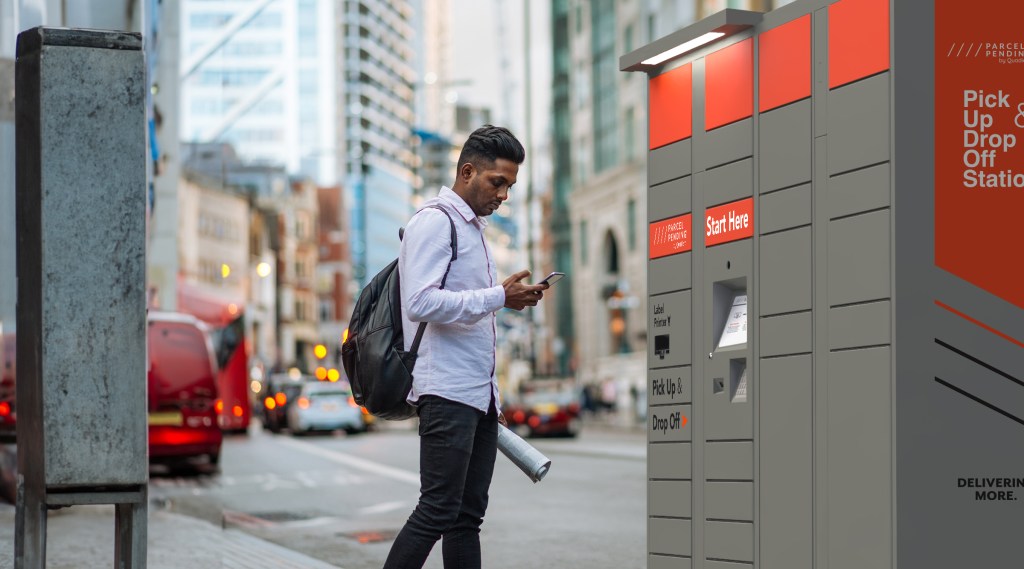
Smart lockers have long been associated with one primary benefit: convenience. They offer consumers a secure, self-service way to collect or return parcels at a time that suits them.
But as retail continues to evolve, lockers are proving to be far more than a functional add-on to fulfilment, says Lee Graham, Sales Director at Parcel Pending by Quadient.
When deployed strategically, they can become powerful drivers of customer experience (CX), loyalty and measurable return on investment. Lockers are quickly moving from a back-end logistics solution to a front-end customer engagement tool. The opportunity lies in rethinking smart lockers not simply as delivery endpoints, but as touchpoints within the wider retail ecosystem.
From convenience to experience
Convenience remains essential. Research shows that 40–45% of parcel drop-offs and collections take place outside traditional 9am – 5pm hours. This tells us two things: first, that customers value flexibility; and second, that lockers extend a retailer’s service window far beyond staffed hours.
But convenience alone does not build loyalty – experience does.
The most successful locker deployments are located close to where customers live, shop or travel. Proximity removes friction. When collecting a parcel becomes part of an everyday routine – on the way home, near a supermarket, adjacent to a retail park – it feels effortless. That ease translates into positive brand perception. In fact, nearly 40% of users surveyed said their opinion of a host location was more positive after using a locker there.
In a competitive retail landscape, those small perception shifts matter.
Driving footfall and attachment
For retailers offering lockers at their stores or on-site, the commercial impact is tangible. According to our survey data, 77% of customers visited a location specifically to use a locker and, of those, around 20% went on to make a purchase in-store. Those incremental purchases can be meaningful, with spend reaching up to £10 per visit.
This is where lockers begin to demonstrate clear ROI. Rather than just simply serving existing customers, they create additional reasons to visit. In many cases, lockers act as low-risk, high-reward traffic drivers – particularly within open network models that allow multiple carriers and service partners to use the same infrastructure.
For retailers grappling with declining High Street footfall, this “attachment effect” can make a measurable difference.
A locker user collecting an item may also pick up a few groceries, grab a coffee or browse seasonal promotions. Over time, those small, habitual add-ons build steady revenue streams that far outweigh the footprint of the locker itself.
A platform for multiple services
Another shift we’re seeing is the expansion of locker use cases. Consumers are no longer using lockers solely for parcel collection and returns. They are storing personal items, exchanging keys, collecting prescriptions, handling repairs and buybacks, and even managing field service parts.
For retailers, this diversification opens up partnership opportunities. Lockers can support click-and-collect, returns consolidation, product repairs and resale schemes, all of which align with sustainability and circular retail strategies.
By integrating lockers into omnichannel journeys, brands can reduce queue times, streamline staff workload and offer customers greater autonomy.
Importantly, 98% of surveyed users said they loved or liked having a locker close to where they live or shop – and that level of satisfaction reflects trust, reliability and perceived value.
Designing for loyalty
If retailers want lockers to deliver real value, they need to get three things right.
First, the network needs to be open and shared to allow more carrier partners, more locations and more frequent use. Location also matters – putting lockers where people already go, near entrances, car parks and busy footfall areas for example, drives visibility and extra spend. Finally, integration is needed to build lockers into apps, order updates and loyalty schemes so they feel like part of the brand, not just a collection box.
Ultimately, lockers are becoming part of the physical-digital bridge in retail. They extend service hours, generate additional visits, support sustainability initiatives and enhance perception of host locations.
Convenience may be the starting point. But when retailers look beyond the transaction and consider lockers as experience enablers, they unlock something far more valuable: loyalty built on everyday moments of ease.

Lee Graham is Sales Director at Parcel Pending by Quadient.
Parcel Pending by Quadient is a package management solution, which delivers almost 72million packages annually.

 Retail Rewired
Leave a comment