
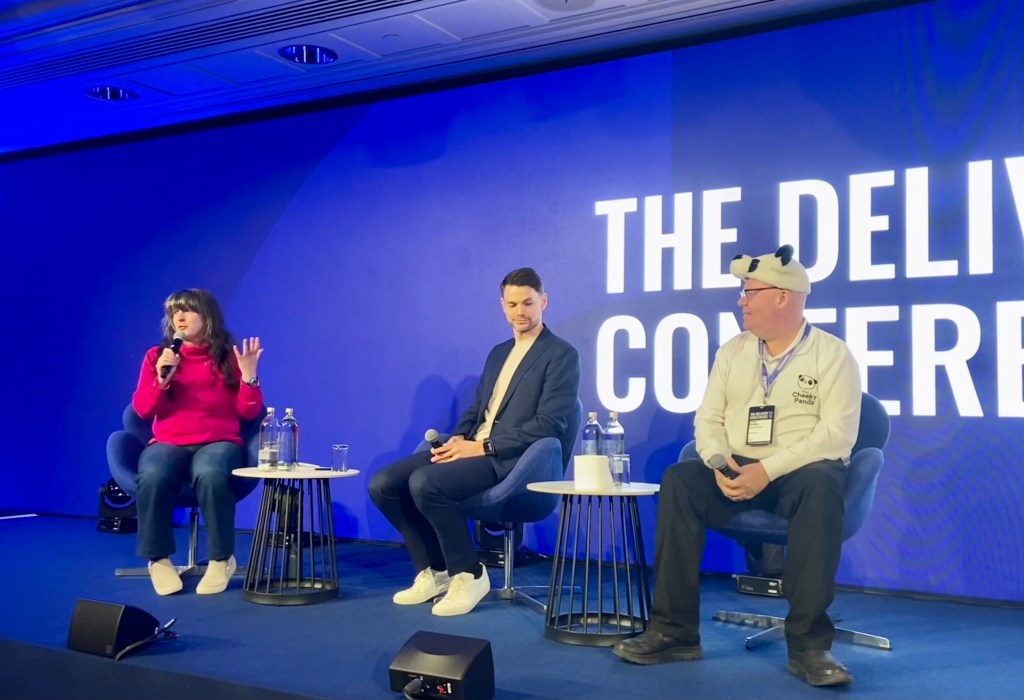
Despite sustained margin pressures, retailers can’t afford to compromise on delivery experience, H&M’s Logistics Network Strategic Lead, Kristian Tottermar, and Cheeky Panda’s Chairman & CEO, Chris Forbes, told audiences at The Delivery Conference earlier this week.
Speaking onstage with eCommerce MasterPlan Podcast host, Chloe Thomas, Tottermar and Forbes outlined the key challenges and strategic approaches needed for brands to turn fulfilment into long-term competitive advantage.
From cost line to CX driver
Looking beyond delivery as an operational function or cost centre, Tottermar described how H&M puts delivery at the heart of its customer experience efforts through a sharp focus on agility.
Explaining how delivery experience has always been “high up” on its agenda, he said H&M was creating competitive advantage through delivery by reacting dynamically to emerging customer demands: “it’s about the speed of change of customer expectations [and being] able to adapt fast.”
It’s never a good strategy to compromise on customer experience. But while [delivery] needs to be fit for purpose and in line with your business needs, you need to look at both cost and service. Only then will you have a plan to meet rising customer expectations.”
Kristian Tottermar, H&M
Foundational to this is having the right, scalable technology infrastructures in place, he said. “We work in a global context – it’s an ever changing environment. So, tech scalability and having a platform that’s agile enough to adjust to meet trends is key.”
“You’ve got to plan for the unexpected. And that means agility in your thinking, agility in your supply chain, and agility in your technology,” agreed Forbes. “Your risk management’s got to be really hot and [you need to] expect the unexpected.”
Customer retention through delivery advantage
With rising customer acquisition costs, Forbes, who runs sustainable loo roll brand Cheeky Panda, explained how delivery was a crucial pillar in shopper retention.
“When you start looking at the amount of money you can spend on Meta or Google and the rising cost of acquisition, you’ve really got to focus on not having a leaky bucket. If you’re working really hard to get customers in, you’ve got to have retention, and that’s all about delivery and CX.”
He explained a key part of retention was upholding the customer experience from discovery to delivery, adding “you’ve really got to have that full end-to-end process to make people happy and stay with you.”
Culture shifts to drive competitive edge
Both Forbes and Tottermar agreed that for delivery experience to shift the dial in driving strategic advantage, it needs to be a whole company effort. Not one that remains pigeon-holed within teams or sits within siloed departments or business functions. According to Tottermar, this requires a cultural shift within retail organisations so delivery becomes “everybody’s job” and there’s company-wide buy in.
“Delivery and customer experience isn’t just a question for logistics or for sales teams, it needs to be across the organisation. Even if you work upstream, you need to understand what your part is in meeting customers’ expectations.” This relies on breaking down structural siloes so everyone remains focused on the common goal of CX and upholding shopper promises, he advocated.
“We’re not just talking about building systems and architecture here, it’s also the softer part of it. How do you break down communication silos? How do you make sure the softer knowledge that customer comes first is embedded? That’s crucial, and it’s a company wide exercise,” Tottermar added.
Powering value through partnerships
For Forbes, while culture plays a role, he also put strong emphasis on having a robust tech stack in place that can deal with fluctuating demand, allowing for scale while meeting customer expectations.
Having improved delivery success rates at Cheeky Panda from 90% four to five years ago to 98% last year, gaining incremental improvements within delivery experience becomes harder the faster a brand grows, he explained.
“When you start scaling, you need to ask if you can continue to deliver at those really high rates – and that’s about tech partnerships. When we work with our fulfilment centres and software, we’ve got to make sure each bit adds value and satisfies customer needs.”
Forbes recommended interrogating the delivery tech stack to ensure each system was working hardest to deliver value. He described how Cheeky Panda had consolidated its delivery tech ecosphere, streamlining it from ~20 different component apps, which were causing drag and “laggy” integrations that were negatively impacting CX, to just five strategic partners.
“If you can make it fast and seamless, it’s a better experience, it’s better for your margins and, ultimately, it’s more controllable,” he said.
H&M and Cheeky Panda were speaking at The Delivery Conference 2026, the leading retail, ecommerce and logistics innovation event hosted by Metapack and ShipStation.




 Retail Rewired
Leave a comment