

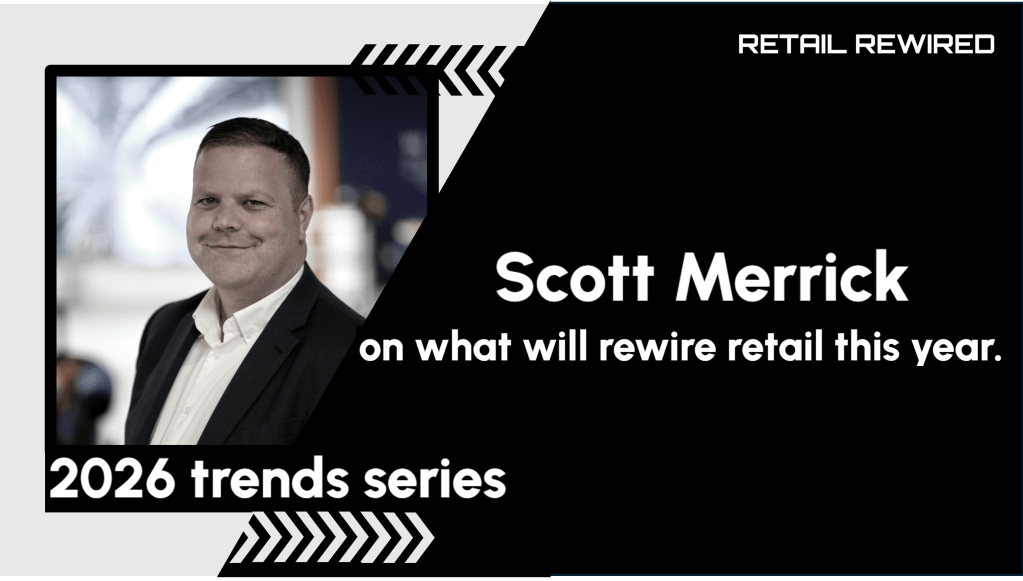
Retail is standing at a crossroads. The pace of technological change has never been faster, and the pressure on fulfilment to deliver seamless, efficient customer experiences has never been higher. Automation is no longer a “nice-to-have” – it’s the foundation on which future retail success will be built, says Scott Merrick is Managing Director of Inteq.
Yet too many retailers still rely on quick fixes: adding temporary staff, plugging gaps with disconnected technologies, or rushing to modernise legacy systems. These tactics may get orders out the door, but they won’t deliver the long-term resilience and agility retailers now need.
Retail success in 2026 will depend on the decisions being made today. Warehouse automation and robotics can drive serious gains but, without the right approach, achieving true competitive advantage will remain out of reach.
The problem with patchwork innovation
Inteq’s research among senior UK retail and ecommerce leaders shows how fragile many fulfilment operations have become. Over half (58%) admit their current systems have negatively impacted service, with almost nine in ten (87%) recognising that robotics and automation would improve performance.
But not all automation is equal. As businesses struggle to keep up with fast-changing technology and innovation, retailers can, too often, approach automation from a piecemeal basis, focusing in on a specific process or piece of legacy hardware.
The result is a patchwork of disconnected processes that may fix an immediate issue but fail to create lasting efficiency.
When systems, software and hardware don’t connect, automation risks creating new bottlenecks instead of solving old ones. A lack of integration can slow fulfilment, increase errors, and make it harder to respond when market conditions shift. And with 53% of consumers saying they wouldn’t shop again with a retailer after receiving the wrong item, the margin for error is smaller than ever.
Starting with the software
The key to true automation success lies in a software-first approach.
Rather than focusing on the hardware first – the machines, the conveyors, the robots – retailers need to think bigger, starting with the strategic problem – whether that’s about managing costs, enhancing the customer experience or creating more flexibility to drive growth.
Software is what enables integration, visibility and control. It allows operations to scale, adapt and evolve as technology advances.
By building around flexible, hardware-agnostic software, retailers can futureproof their automation strategy. When new technology arrives, it can slot into the existing ecosystem rather than requiring a full system overhaul. This not only protects ROI but ensures that innovation drives continuous improvement instead of constant disruption.
Sustaining the system to ensure automation delivers today – and tomorrow
When it comes to thinking about 2026 and beyond, even the smartest automation strategy will become exponentially more powerful when it’s supported by strategic maintenance.
Maintenance unlocks the full potential of automation, ensuring systems not only run smoothly but continually improve and evolve as the business does.
With a modern maintenance approach, every part of the ecosystem – from orchestration software to robotics and mechanical systems – stays finely tuned, fully integrated and ready to deliver peak performance. This ongoing optimisation strengthens speed, accuracy and reliability across fulfilment, giving retailers the consistency they need in an unpredictable market.
Crucially, today’s data-led maintenance is proactive, not reactive. Real-time insights and predictive analytics help retailers continually enhance performance, extend asset lifespan and introduce new innovations without disruption. It turns automation into a dynamic, future-ready capability, one that drives better customer experiences, greater operational agility and stronger ROI year after year.
The time to act is now
There’s no question that automation and robotics have moved from “future technology” to present reality. The technology is here, proven, with nearly seven in ten retailers adopting it see tangible benefits within the first year.
Retailers that start now will be ready to meet the demands of the coming year with scalable, connected and intelligent fulfilment operations. Those who delay risk another cycle of firefighting, trying to patch problems in the middle of peak demand.
Fulfilment is no longer just a back-office function; it’s the backbone of customer experience and the ultimate differentiator in a crowded market. Retailers who act decisively, start with the software and sustain the system – will be the ones setting the pace in 2026 and beyond.

Scott Merrick is Managing Director of Inteq.
Inteq is a leading integrator of automation and robotics technology for supply chains.




 Retail Rewired
Leave a comment