

While retail has spent years flirting with circularity, piloting it in a forgotten corner of the website, 2025 has forced a reality check. Consumers no longer see second-hand as a compromise; they see it as common sense.
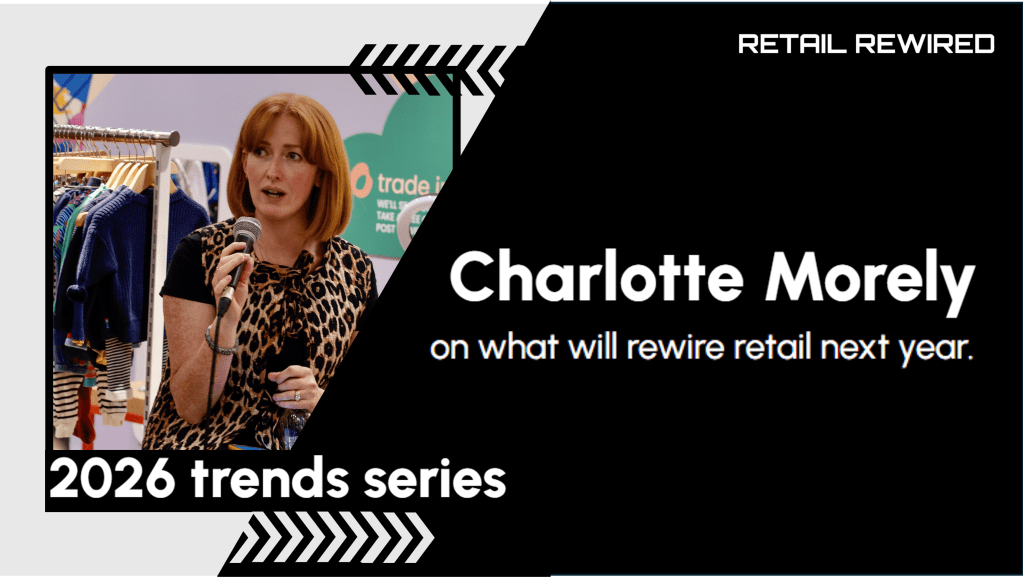
So much so that it is now cannibalising primary sales on a level brands neither expected nor planned for, says Charlotte Morley, Founder & CEO of thelittleloop.
The rise and rise of resale
Resale has been the 2020s’ silent revolution. Creeping quietly into every home while we were looking the other way. Even as fast fashion has continued to explode, it has been matched side by side by the boom in second-hand.
Which is why in 2025, while SHEIN is France’s second largest retailer, Vinted has taken the top spot. In fact, £10billion in preloved clothing sales were made on Vinted in Europe in the last year alone. And when shoppers change faster than retailers, the industry is left scrambling.
The harsh truth is that retailers have been giving their customers away. Peer-to-peer (P2P) marketplaces have captured the pre-loved economy, meaning brands not only lose control of their product lifecycle – they lose the customer along with it. A consumer who sells a jacket on a third-party platform isn’t coming back to trade in, upgrade or browse the brand’s new collection; they’ve left the ecosystem.
From where we sit, powering the takeback schemes for some of the UK’s leading brands, 2025 was the year retailers finally woke up to this. We’ve had conversations underpinned by real intent, driven from the highest levels of the business. And with real revenue and loyalty goals in mind – resale is no longer simply a marketing exercise.
Getting resale right
The question is no longer “can a brand do resale?”. Instead, it’s “how long can a brand afford not to?”.
But getting it right isn’t easy.
Brands can’t expect customers to shift from third-party platforms without putting in considerable effort. The rise in second-hand has been driven as much by its rapidly increasing ease and availability as by any ideology around cost – or sustainability. The sophisticated and brilliantly designed user experiences on P2P platforms like Vinted provide the easiest pre-loved selling and buying experience by far. One location, to buy and sell everything you need – it’s hard to beat.
For brands to expect customers to engage with siloed take-back schemes with clunky user interfaces, managing multiple relationships with different brands, is not only unrealistic – it’s short sighted. The time and effort lost in implementing a scheme which doesn’t work for customers will incur significant cost.
But there is some good news.
P2P resale has an underestimated flaw. An opportunity which brands are ideally placed to capitalise on. Over 65% of consumers won’t sell their items on Vinted because they have neither the time nor the emotional energy to manage hundreds of individual sales to different buyers. Instead, their clothes languish in closets or head to the recycling bin.
Offering to do the hard work for customers gives brands the edge, for the huge proportion of customers who won’t sell P2P. It’s not about competing with Vinted. It’s about making preloved work for everyone else.
Centralising take-back, enabling customers to offload all their unloved items from their home and receive instant reward, with zero friction is incredibly powerful and key to transforming your circular offering from a niche sustainability project, into a core element of your channel mix.
And doing doesn’t need to create risk, losses or complexity for retailers. At thelittleloop – soon to be Lloop as we expand our offer to adult retailers in 2026 – we’re laser focused on eliminating complexity so retailers can run takeback schemes without drowning in manual processes. And instead of silo-ing your circular offering, we stitch all of our brands together via a centralised ‘Digital Closet’, which finally makes brand-led takeback work for customers.
From pilots to full-scale circularity
In 2026, the demand is shifting from “can you run our takeback?” to “how far can we take this?”.
Brands want deeper circular propositions which don’t rely solely on loyalty but drive real incremental revenue and value for their customers. The appetite is no longer for pilot programmes – it’s for scale.
Kidswear is the category that broke the industry’s old model. High churn, fast growth and short usage windows make second-hand the obvious solution. And parents, above all, care about value, quality and ease. Which is why we, and so many of the brands we support, start their circular journey here. But we’re not stopping there. The adult market is crying out for our sophisticated customer-first solution and we’re about to bring it.
In 2026, customers will expect trade-in, brand guarantees on pre-loved, clarity on condition and circularity designed into the retail experience – not bolted on.
The next phase of retail won’t be defined by who sells the most. It will be defined by who wastes the least, who retains the most customers and who captures the most value from every garment they produce. Particularly as new End Producer Responsibility legislation moves ever closer.
For brands ready to adapt, the opportunity is enormous. For those that hesitate, the market will move without them. And for all of us building the infrastructure behind this shift – the future couldn’t be more exciting.

Charlotte Morley is Founder & CEO of thelittleloop.
thelittleloop is UK’s first aggregated garment circularity platform, which powers the nation’s best brands to provide a collaborative resale experience designed to put the customer first.

 Retail Rewired
Leave a comment