
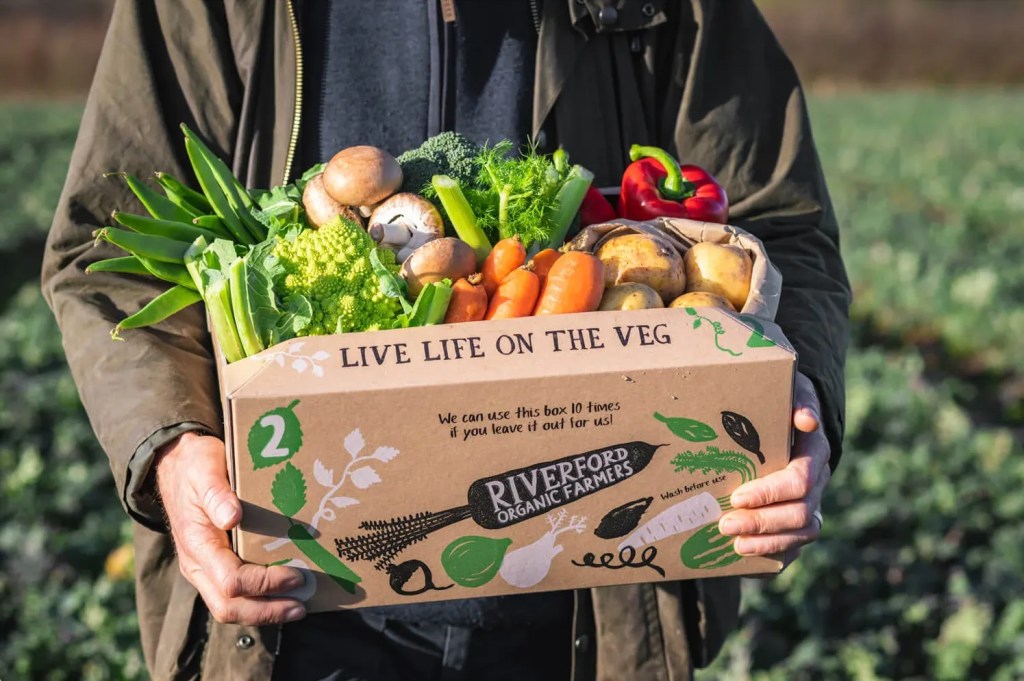
Riverford will partner with RELEX Solutions for demand and production planning and production scheduling, as the organic veg box brand embarks on a digital transformation push as part of its mid- to long-term growth strategy.
The move aims to automate demand and supply planning, helping the retailer improve freshness, reduce waste and streamline its production processes.
Demand for organic food has gained pace in the UK, even as cost-of-living pressures persist. The Soil Association’s 2025 Report showed that last year, growth of organic produce sales outstripped that of non-organic goods, up +7.3% to £3.7billion – double the levels of a decade ago.
Following growing demand for its veg boxes, Riverford, which operates two organic farms and production sites as well as managing ~200 SKUs sourced from other farms, sought to automate its processes. It identified the need to move beyond manual, spreadsheet-based planning to an advanced AI-driven solution to drive efficiency and scalability.
Selecting RELEX’s unified planning solution, Riverford will move from reactive to proactive planning. The system will automatically balance demand and supply, while keeping the production plan optimised, allowing it to account for optimal freshness requirements and capacity limits.
By linking long-term planning with daily operations, Riverford will gain up-to-date visibility across its value chain, enabling faster adjustments to demand shifts, more efficient use of raw materials and consistently fresher boxes delivered to customers.
Greater supply chain resilience
“Our commitment to delivering the freshest organic produce means we need precision and adaptability as we grow,” said Rob Morgan, CTO at Riverford. “With RELEX, we can move to an AI-driven planning solution that helps us make faster, better decisions to the benefit of our customers.”
“We are proud to support Riverford, a brand synonymous with quality and sustainability,” said RELEX Solutions’ Stefano Scandelli. “Fresh produce planning presents one of the most challenging supply chain problems due to perishability, variable demand and short shelf lives.”
He added that the move would “deliver fresher products, reduce waste and build even greater resilience” in Riverford’s supply chain.



 Retail Rewired
Leave a comment