
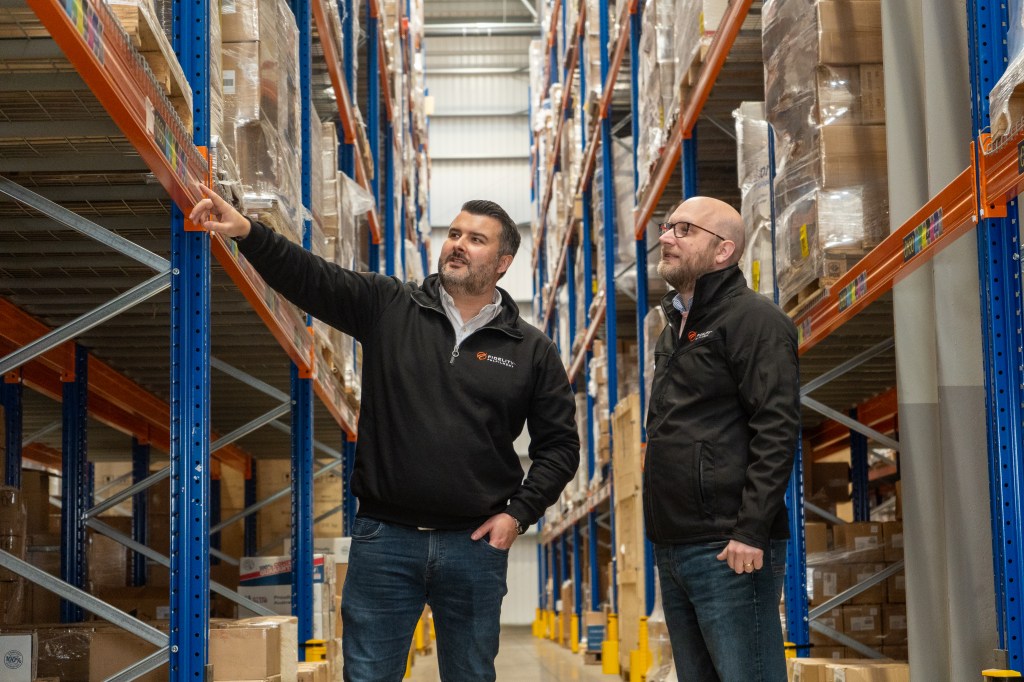
For retailers and fulfilment providers, “peak” used to mean one thing: Black Friday, says Stephen Williams, Director & Co-Founder of Fidelity Fulfilment.
Just a few years ago, it was a one- or two-day sales frenzy, a true spike in demand that required all hands on deck, but that picture has changed dramatically. Today, Black Friday has lost some of its singular appeal. The shopping period now stretches across much of November, with retailers launching deals earlier and extending them for weeks.
This shift has big implications for ecommerce fulfilment. We can no longer assume one massive surge; instead, operations need to manage sustained, elevated demand over a longer period, without compromising on customer experience.
Here, Williams outlines key strategies for peak and how retailers and brands can effectively prepare for the critical trading period.
Be smart about discounting
For brands, the temptation to go big on Black Friday discounts is still strong. But it’s worth asking whether sacrificing margin is really worth it. If you’re discounting products customers would have bought anyway, the result is simply reduced profitability.
Increasingly, brands are using Black Friday to clear out older or slower-moving inventory, rather than showcase marquee products. This can be an effective strategy, provided it doesn’t dilute the perception of quality.
Premium brands, such as artisan food makers or specialist electronics brands, often find that blanket discounting undermines their value proposition. Communicating scarcity and quality year-round, rather than relying on one noisy sales event, can preserve brand integrity while still generating sales.
Plan collaboratively
For fulfilment providers, the challenge of peak isn’t just volume, it’s unpredictability.
If a brand drives 60% of its annual sales through one weekend, that creates enormous operational strain. Either you carry idle capacity year-round, which is costly, or you scramble to staff up temporarily, which comes with its own risks.
Ensuring your third-party logistics partner (3PL) is involved in the strategy planning for peak season is therefore essential, as is consistent communication throughout.
Brands need to work with their 3PL partner to forecast sales spikes with as much accuracy as possible, and as early as possible. This alignment is particularly important for sectors like consumer electronics, where new product launches coincide with holiday shopping. Missed inventory or delayed shipments can quickly damage customer satisfaction.
Retailers also need to manage customer expectations online, setting clear cut-offs for shipping and communicating availability to reduce frustration.
Invest in scalable, resilient technology
Technology is the backbone of peak readiness, but the biggest challenge is scalability.
Many off-the-shelf systems perform well under normal circumstances but struggle when order volumes double or triple overnight. Shared servers can become overwhelmed, processing slows, and errors creep in.
Integration with ecommerce platforms presents another hurdle. Platforms like Shopify or Magento enforce API rate limits that dictate how often external systems can retrieve order data or update shipping statuses. If integrations aren’t optimised, this can lead to lags between order placement and fulfilment, putting SLAs at risk.
Leading retailers and 3PLs have addressed this by investing in systems designed for speed and resilience. Stress-testing systems and optimising data flows are non-negotiable steps to ensure operations can scale under peak pressure.
Safeguard quality with the right controls
One reality of peak season is the influx of temporary staff. While they’re essential to meeting demand, they’re often less experienced, which can increase the risk of errors. That’s where process controls and technology safeguards become critical.
Simple steps like second scans at packing benches, automated quality checks, real-time dashboards, and clear escalation paths ensure accuracy and consistency. The aim is to protect the customer experience, even under extreme operational pressure.
Without these controls, brands risk increased returns and long-term damage to loyalty. Protecting quality during peak isn’t just about operational efficiency, it’s about brand reputation.
Balance global variation with local strategy
Finally, it’s important to recognise that peak isn’t uniform across regions, sectors, business types or consumer demographics.
In the United States, for example, Black Friday has become a month-long event, while in Europe its impact varies by category and brand strategy. B2B businesses typically see sales increases earlier in the peak season, DTC brands experience their spikes later on and, while electronics retailers still see major spikes, premium gift and artisan products often experience more modest surges.
Understanding these variations is essential. Retailers should tailor their fulfilment strategy to their market realities rather than applying a one-size-fits-all approach.
For some, smoothing sales across the year and discouraging “wait until November” behaviour is the smarter strategy. For others, ensuring they can handle a concentrated surge could make or break annual performance.
A new era for Peak Trading
Black Friday may no longer be the singular event it once was, but Peak Trading remains a defining test for retailers and fulfilment providers.
The winners will be those who plan early, invest in scalable technology, safeguard quality and balance volume with brand value.
Ultimately, success in peak is less about chasing short-term spikes and more about building resilient, customer-centric fulfilment operations that perform under pressure. In today’s climate, that’s not just a seasonal necessity but a year-round imperative.

Stephen Williams is Director & Co-Founder of Fidelity Fulfilment.
Fidelity Fulfilment offers omnichannel logistics & 3PL distribution services for B2B and B2C brands across the UK, U.S. and Europe.



 Retail Rewired
Leave a comment