
Credit: Anglia Picture Agency/Ashley Pickering
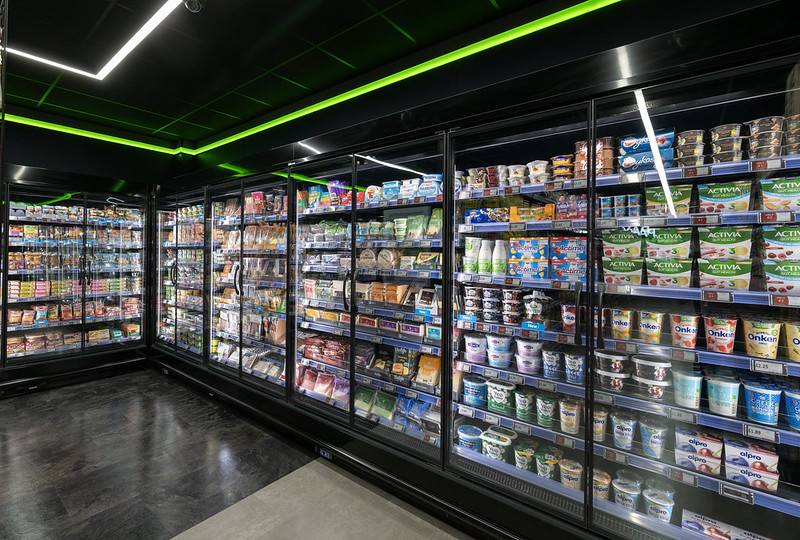
East of England Co-op has reported a cut of up to 55% in branch grid energy use, as store refurbishments and new-builds focus on sustainability measures including CO₂ refrigerants, solar installations and a recent renewable power deal.
The regional retailer’s ongoing refurbishment programme has put sustainability and energy efficiency at the centre of design. It says every aspect – from the type and model of equipment, lighting systems, and refrigerants used, to the potential for renewable energy integration and choice of surface finishes – plays a role in improving energy performance and reducing environmental impact.
All East of England Co-op’s new Food stores and refurbished Food stores are equipped with CO₂ refrigerant gas, which has a Global Warming Potential (GWP) of 1, making it significantly more sustainable than traditional synthetic hydrofluorocarbons (HFC) refrigerants, which can have GWPs as high as 3,900.
In April, the retailer signed a 10-year Corporate Power Purchase Agreement (CPPA) with RWE, the UK’s largest power generator and leader in renewable energy. This agreement ensures the supply of renewable electricity from the London Array offshore wind farm in the outer Thames Estuary. The contract is now providing clean energy covering 32% of East of England Co-op’s current annual electricity demand – reducing CO₂e emissions by 2,000 tonnes.
“Sustainability is at the heart of how we design and develop our Food stores. From the energy-efficient systems we install to the renewable energy we now source, we’re making tangible progress towards reducing our environmental impact. These improvements are not just good for the planet; they also help us build a more resilient and responsible business for the future.”
Steven Fendley, Head of Sustainability, East of England Co-op

Credit: Anglia Picture Agency/Ashley Pickering
East of England Co-op has also expanded the use of solar energy to improve the sustainability of its sites. Solar panels have been installed on the roofs of seven of its Food stores across the region. Its Woodbridge Road Food store in Suffolk is also home to the retailer’s first-ever solar carports. The carports alone will bring the expected total capacity to 35,000 kWh, enough to power 13 UK average homes for a year.




 Retail Rewired
Leave a comment