
With UK retail media ad spend set to exceed £5.5billion by next year, according to the IAB, brands are quickly accelerating their retail media offerings or launching new ad or media divisions. However, we’ve also seen players that sit outside the ‘traditional’ retail media space opening up data and audiences to media buyers and third-party advertisers.
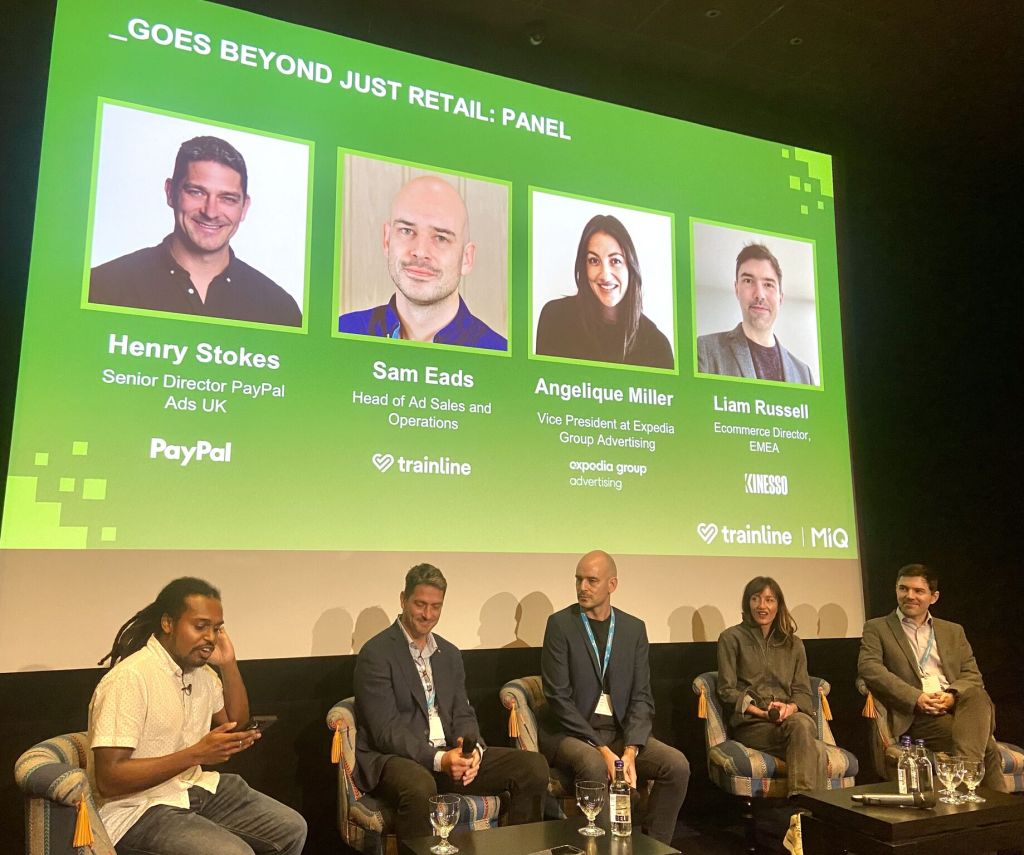
At the launch event for Retail Media Age, we heard from some of those commerce media businesses – including PayPal, Trainline and Expedia – who shared how brands beyond retail are looking to power RMNs. They explored strategies for monetising data and audiences to get closer to customers, while also offering complementary services that stay true to their core brand values and customer cohorts.
The money shot: The power of data collabs
Arguably, PayPal was a little late to the retail media party, admitted its Senior Director of PayPal Ads, Henry Stokes.
“We’re a 25 year-old business with amazing transaction data across millions of retailers and consumers globally, yet we never really considered launching an ad division,” he said. But with merchants and third-party brands coming to it and asking how PayPal could connect them to the 400million consumers that globally use its payments technology at online checkouts, the opportunity was tangible.
The realisation came when it interrogated its data – which has become a strategic asset for growing its ad division. “When you think about the brands PayPal has relationships with, we can bring great offers, messages and deals to our consumer base,” said Stokes. “There’s value that we bring to our advertising proposition, as well as to our end users, so that’s a real driver for us.”
Despite having 27million average monthly users, Trainline is also at a “nascent stage” of identifying itself as a media owner in its own right, its Head of Ad Sales & Operations, Sam Eads, revealed. “Where we sit at the moment is at the intersection between retail media, travel media and commerce media.”
“As a high-frequency, daily-use app and as a key platform for travel purchases, we’re exploring how we can serve customers brand creative, offers and engaging content that resonates to drive traffic to third-party brands’ storefronts,” Eads said.
Knitting complementary brands together
While Expedia had successfully monetised its on-site audiences, it is now focusing on moving towards off-site activations – and that requires a mindset shift, Angellique Miller, VP of Expedia Group Advertising, explained. “This moves us out of ‘just’ travel purchases, and into the consideration set for broader purchases across complementary products,” she said.
“We try to connect our campaigns back to travel-adjacently and knit two complementary brands together,” Miller added. For travellers, holidaymakers or wanderlust consumers, this could be anything from skincare to fashion and streaming media to books.
Outside of travel, Liam Russell, Kinesso‘s EMEA Ecommerce Director, gave examples of other ‘non-traditional’ retail media players, such as Klarna or some of the Q-Commerce companies like Uber, who were also successfully growing their RMNs.
“They have so much deep and interesting data for our brands on consumer behaviour and spending habits, so they can build out these great lifestyle audiences to help brands find and connect with new sets of customers,” Russell added.
“The collaboration between data sets and creative offers the ability to develop campaign around audiences that a particular brand couldn’t usually tap if it weren’t for retail media. It’s about matching an audience to a lifestyle, rather than a product or category, to create that connection.”
Liam Russell, Ecommerce Director EMEA, Kinesso
Finding unique ad surfaces for moments for connection
For Stokes, successful commerce media is also about finding the uniqueness, not just in your data, but also across your channels or ad surfaces. And this requires thinking about what the retail reality is – and identifying the moments where messages or content will resonate the most in an organic way.
He gave the example of how Uber’s retail media “popped” when it identified its highest engagement came during customer ‘wait times’, for example between ordering a cab and it arriving or when Uber Eats customers are waiting for their food orders.
This window of opportunity around the ‘wait’ is unique to Uber and takes place on its platform, making it a highly relevant and effective media surface for ads. In the same way, PayPal is looking at where within the payments journey it can bring merchants’ store fronts into ad formats, while improving the checkout experience for its end users.
Contextual targeting & cross-data collabs
One of the biggest opportunities for commerce media – and that sets it apart from traditional retail media – is its ability to shift towards data matching.
Eads explained that as marketers are looking to be more targeted – and as pressure on them to deliver Return On Ad Spend (ROAS) has also risen – cross-brand data collaborations are helping deliver more “bang for their buck” and offering a more targeted way to activate against a customer.
It’s not just about data collaboration, Stokes added. Scale and breadth of insights that offer more insight over and above just clicks and conversions, help third-party advertisers add “contextual relevance” so they can serve the right offer, content and promotions.



 Retail Rewired
Leave a comment