
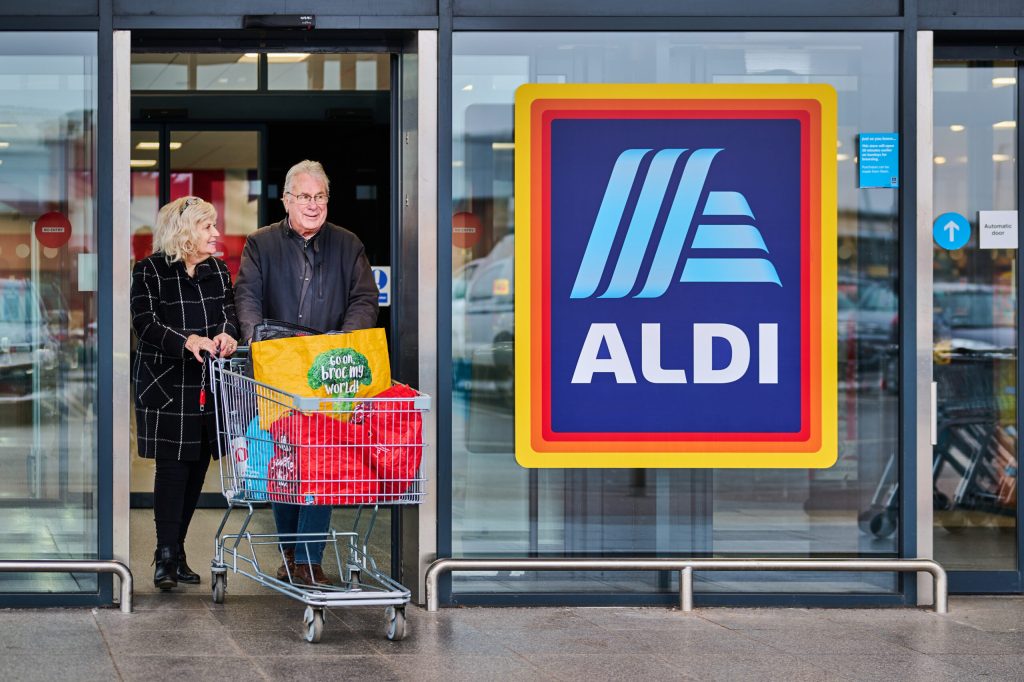
Discounters, Lidl and Aldi, were among the fastest growing grocery retailers over the last quarter, according to Kantar’s latest figures.
In the twelve weeks to 18 May, Kantar’s data showed that together Lidl and Aldi grew their market share by 8.4% year-on-year, their strongest combined growth since January 2024.
Lidl closes the gap on Morrisons
Of the discounters, Lidl put on the most market share growth in the last quarter, growing by +10.9% compared to last year.
This takes its overall market share to 8.1% as the UK’s sixth largest grocer, as it inches closer to Morrisons, currently ranked as the fifth biggest supermarket with 8.4% market share, with a gap of just 0.3% splitting the two.
Lidl drew in an extra 419,000 extra shoppers compared with last year – the most of any retailer – The Guardian reported, while looking ahead Lidl GB said it will invest half a billion pounds in expansion plans to grow its store network, eyeing over 40 new store openings across the UK.
Aldi remains UK’s fourth largest grocer
Aldi remained the UK fourth largest grocery brand with 11.1% market share, according to Kantar’s data. It increased sales by +6.7% in the last quarter, helped by its commitment to low prices.
Consumer group Which? named Aldi the UK’s cheapest supermarket in April, marking the eighteenth consecutive month the retailer has retained the top spot for the lowest prices.
“We’re proud to continue our our eighteenth consecutive month as the number one retailer for value; offering shoppers consistently low prices, whilst maintaining quality,” Aldi UK’s Chief Commercial Officer, Julie Ashfield, said.
Inflation moves past tipping point for discount-led shopping
In the past month, grocery price inflation saw a significant jump to 4.1%, a 15-month high and the sharpest rise in grocery prices since February 2024. Grocery price inflation in the four weeks to 18 May was also up +0.3 percentage points on April’s figures (3.8%).
As inflation moves past the 4% mark, this tends to be the ‘tipping point’ that prompts shoppers to change their buying behaviours, according to Kantar, opting for cheaper alternatives, switching to own-label and becoming generally more deal-sensitive.
“Households have been adapting their buying habits to manage budgets for some time. But we typically see changes in behaviour once inflation tips beyond the 3% to 4% point, as people notice the impact on their wallets more.”
Fraser McKevitt, Head of Retail and Consumer Insight, Kantar
In May, the growth of consumer spending on deals increased by +5.1% year-on-year.
“Own label lines are ones to watch,” McKevitt added, “with premium own label, in particular, being the fastest growing part of the market since September 2023.”


 Retail Rewired
Leave a comment